All Cambelts have their own replacement intervals. Exceeding these intervals will have the potential to snapping and destroying your engine – resulting in MUCH, MUCH costlier repairs and nobody likes that, not us and not our wonderful clients.
If you’re unsure of your interval periods, we will happily research and tell you the recommended replacement stages for any of your vehicles and then organise a ‘no obligation’ quote for you.
Right… Now to the details of this particular project.
The client approached us and asked us to investigate as to whether or not their cambelt required changing.
Now, for the interest of all those reading – here are the current recommendations from us:
| Model | Interval |
| 1.4 / 1.6 16v | 40k Miles or 4 Years |
| 1.6 / 2.0 8v | 60k Miles or 4 Years |
| 1.6 / 2.0 TDI CR | 75k Miles or 5 Years |
| 1.8T 20V | 60k Miles or 4 Years |
| 2.0 / 2.0T 20V | 60k Miles or 4 Years |
| 2.0 FSI / FSI T | 80k Miles or 4 Years |
| 2.4 / 2.8 V6 Petrol | 80k Miles or 4 Years |
| 3 / 4 Cyl TDI PD | 40k – 60k Miles or 4 Years (depending on model) |
| 4 Cyl 2.0 TDI PD | 80k Miles or 4 Years |
| 4 Cyl TDI (non PD) | 60k Miles or 4 Years |
| 5 Cyl TDI (e.g. T4) | 80k Miles or 4 Years |
| 6 Cyl TDI V6 | 80k Miles or 4 Years |
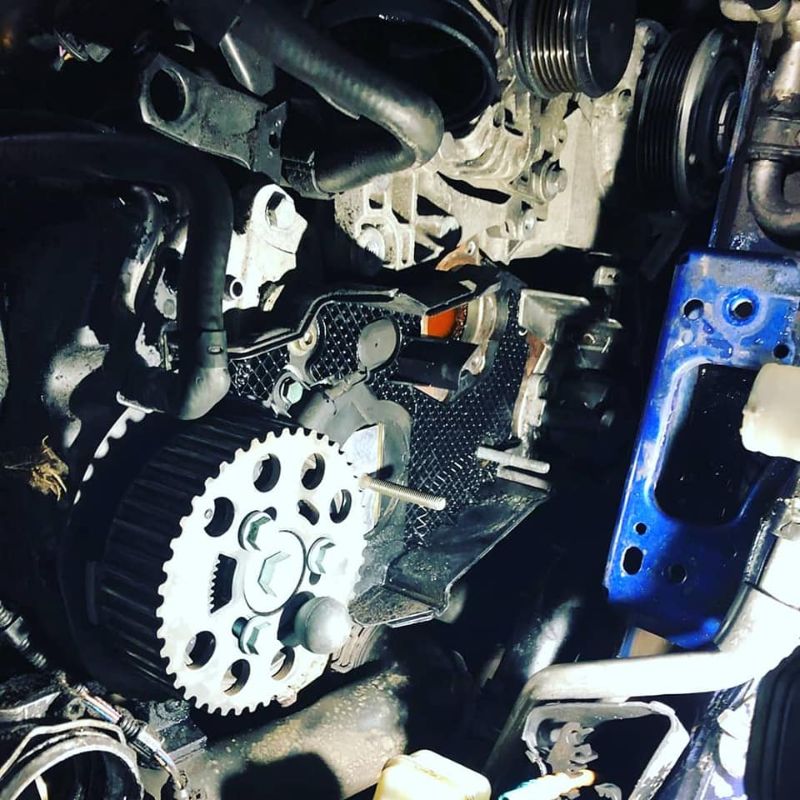
Upon further investigation, we concluded that the cambelt did indeed require changing – along with the waterpump. We replaced everything quickly and all for a great price.
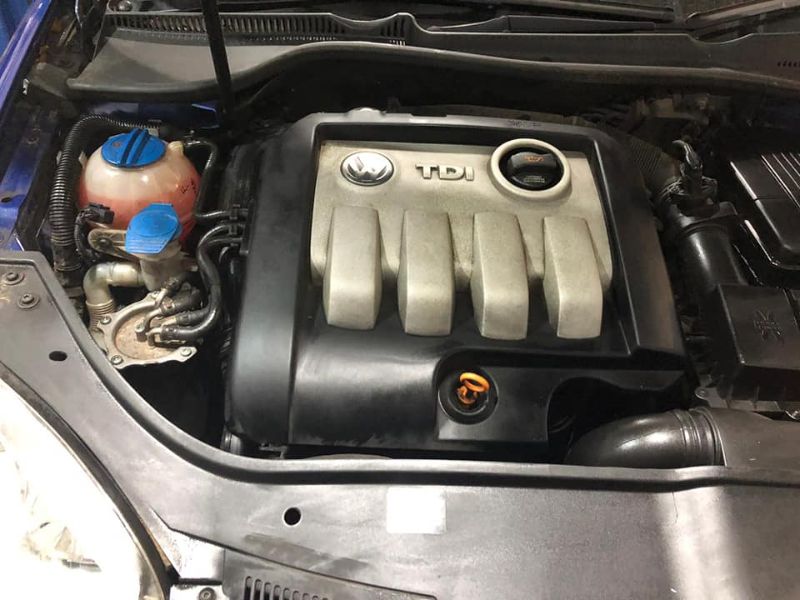
Changing the cambelt on this VW Golf, ensured that a costly repair bill down the line has been avoided. For more information on our cambelt services – please click here.
Take a look at the gallery below: